4995 x 7903 px | 42,3 x 66,9 cm | 16,7 x 26,3 inches | 300dpi
Aufnahmedatum:
10. Mai 2022
Ort:
English Garden, Munich, Germany
Weitere Informationen:
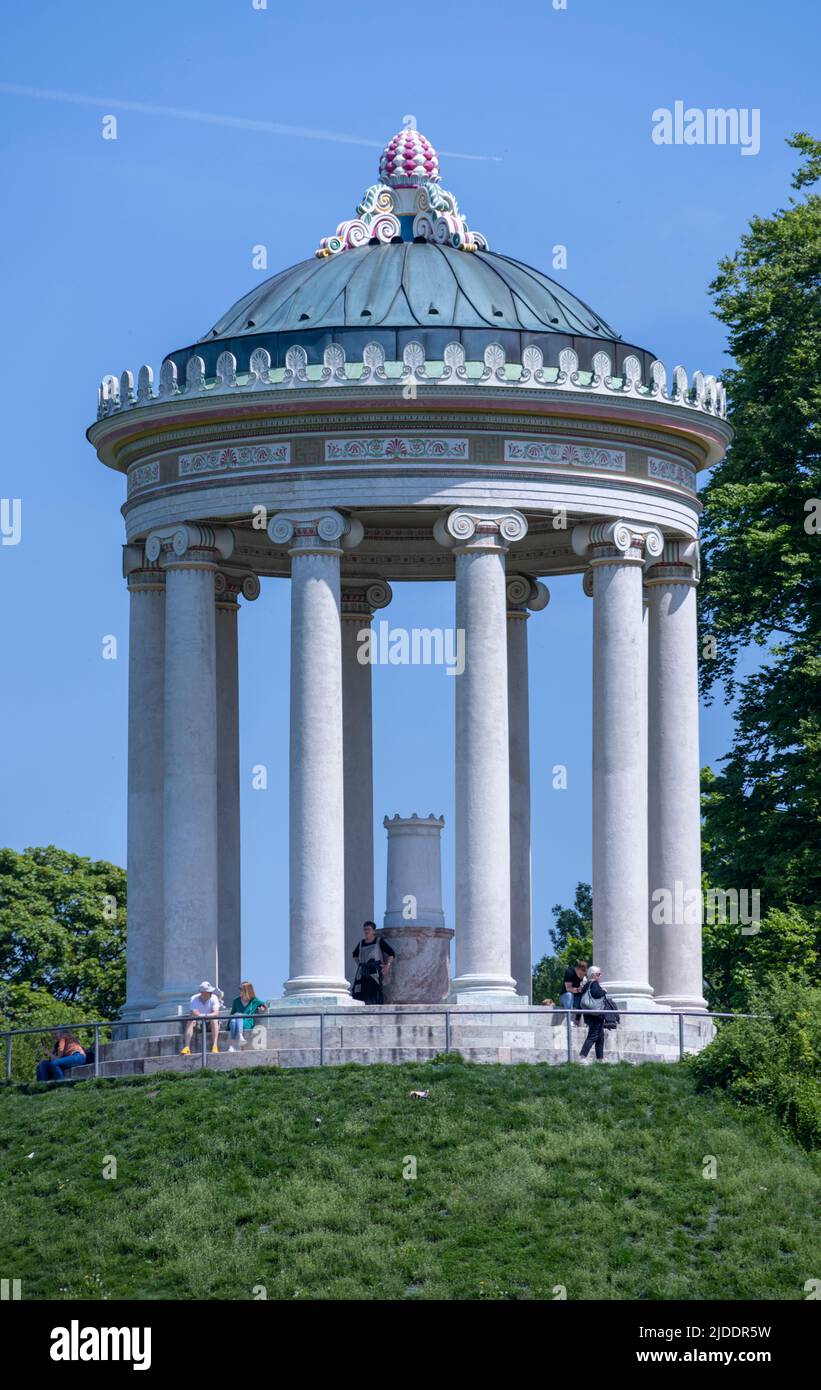
The Monopteros When the nearby wooden Apollo temple had fallen into disrepair, an early idea of Sckell's for a hilltop temple was taken up and a new stone building of similar design was commissioned (an early plan even calls the Monopteros "Apollo Tempel", a name it never actually bore). This small (16 m high), round, Greek style temple was designed by Leo von Klenze. It was built on a 15 m high foundation, around which a small hill was created in 1832, using leftover building material from recent work on the Munich Residenz (Royal Residence). Hill and temple were completed in 1836. Ten Ionic columns support a shallow copper covered dome; palmettes adorn the sima. A particular feature of the Monopteros is the use of polychrome stone painting, an interest of Klenze at the time, who intended the building to serve as a model for its use. The Englischer Garten English Garden) is a large public park in the centre of Munich, Bavaria, stretching from the city centre to the northeastern city limits. It was created in 1789 by Sir Benjamin Thompson (1753–1814), later Count Rumford (Reichsgraf von Rumford), for Prince Charles Theodore, Elector of Bavaria. Thompson's successors, Reinhard von Werneck (1757–1842) and Friedrich Ludwig von Sckell (1750–1823), advisers on the project from its beginning, both extended and improved the park. With an area of 3.7 km2 (1.4 sq mi) (370 ha or 910 acres), the Englischer Garten is one of world's largest urban public parks. The name refers to its English garden form of informal landscape, a style popular in England from the mid-18th century to the early 19th century and particularly associated with Capability Brown.