3491 x 4839 px | 29,6 x 41 cm | 11,6 x 16,1 inches | 300dpi
Aufnahmedatum:
1901
Weitere Informationen:
Nur Zugriffsrechte. Dies ist ein Handout- oder gemeinfreies Bild, das von einem Dritten bereitgestellt wurde. Alamy gewährt Zugriff auf die digitale Datei, übernimmt jedoch keine Gewährleistungen hinsichtlich Urheberrecht oder Persönlichkeitsrechten. Änderungen, Bearbeitungen oder Zuschnitte sind ohne vorherige Genehmigung untersagt. Alle kommerziellen Nutzungen erfordern eine vorherige Genehmigung des Inhaltsanbieters.
Dieses Bild kann kleinere Mängel aufweisen, da es sich um ein historisches Bild oder ein Reportagebild handel
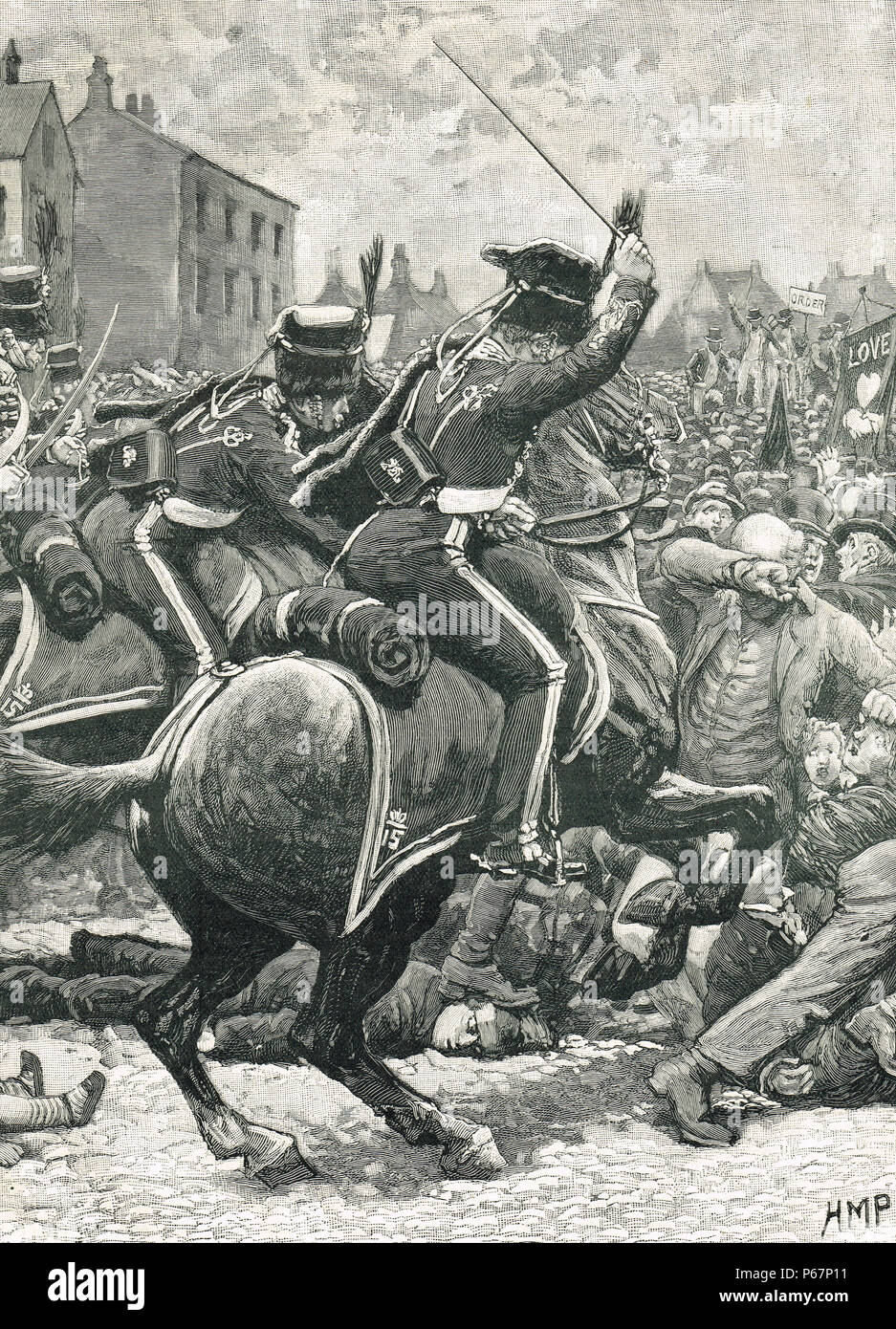
Illustration from Cassell's Century Edition History of England, pub circa 1901 by Henry Marriott Paget (1857-1936) Info from wiki: The Peterloo Massacre occurred at St Peter's Field, Manchester, England, on 16 August 1819, when cavalry charged into a crowd of 60, 000–80, 000 who had gathered to demand the reform of parliamentary representation The end of the Napoleonic Wars in 1815 had resulted in periods of famine and chronic unemployment, exacerbated by the introduction of the first of the Corn Laws. By the beginning of 1819, the pressure generated by poor economic conditions, coupled with the relative lack of suffrage in Northern England, had enhanced the appeal of political radicalism. In response, the Manchester Patriotic Union, a group agitating for parliamentary reform, organised a demonstration to be addressed by the well-known radical orator Henry Hunt. Shortly after the meeting began local magistrates called on the military authorities to arrest Hunt and several others on the hustings with him, and to disperse the crowd. Cavalry charged into the crowd with sabres drawn, and in the ensuing confusion, 15 people were killed and 400–700 were injured. The massacre was given the name Peterloo in an ironic comparison to the Battle of Waterloo, which had taken place four years earlier. In its own time, the London and national papers shared the horror felt in the Manchester region, but Peterloo's immediate effect was to cause the government to crack down on reform, with the passing of what became known as the Six Acts. It also led directly to the foundation of The Manchester Guardian (now The Guardian)
Ausschließlich für die redaktionelle Nutzung freigegeben.
Verwendung im Zusammenhang mit Nachrichten berichterstattung, Rezensionen und Kritik sowie der Übermittlung von Informationen über Personen, Orte, Dinge, Ereignisse oder Geschehnisse.
Zur Klarstellung: Die redaktionelle Nutzung umfasst keine Nutzung im Zusammenhang mit Werbung, Verkaufsförderung (z. B. verkaufsfördernde Webseiten), Marketing, Verpackung oder Merchandising.