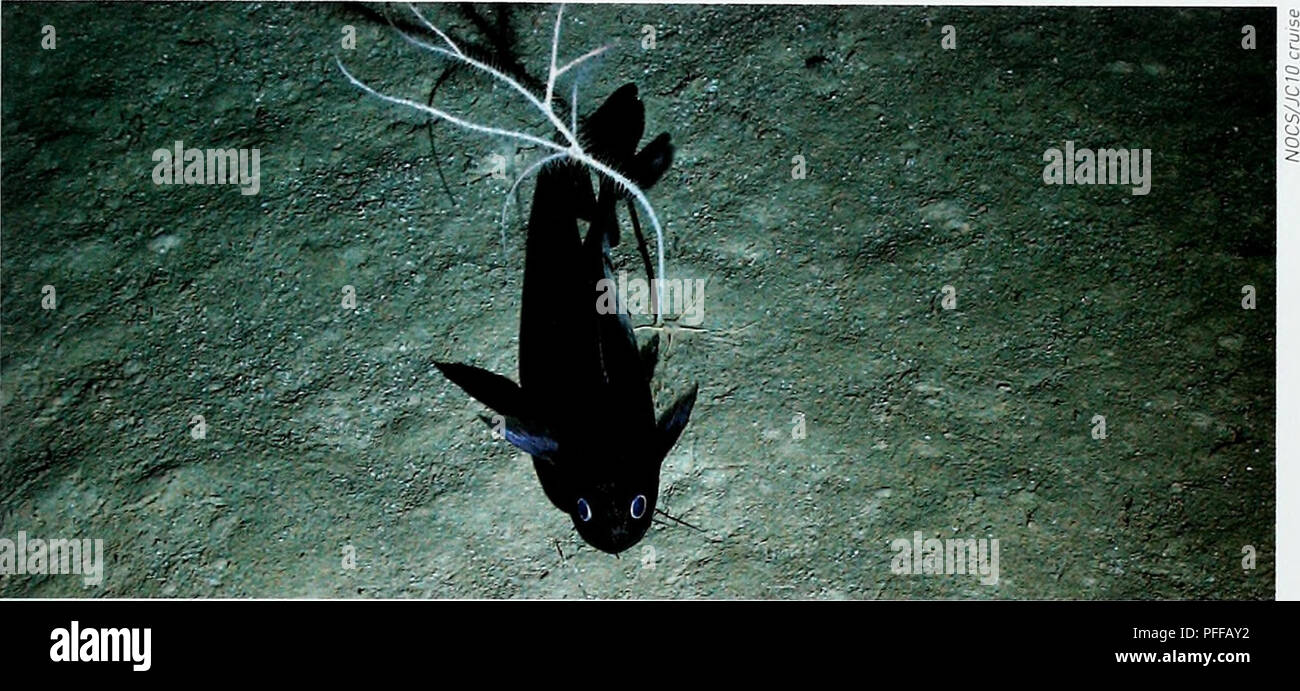
Dieser Bericht konzentriert sich auf die biologische Vielfalt und die Ökosysteme in Tiefseeumgebungen, insbesondere im Golf von Cadiz im Ostatlantik. Es werden die sozioökonomischen Auswirkungen dieser Ökosysteme und die Bedeutung ihrer Bewirtschaftung und Erhaltung für die künftige Nachhaltigkeit und den Erhalt der biologischen Vielfalt erörtert.
2324 x 1075 px | 39,4 x 18,2 cm | 15,5 x 7,2 inches | 150dpi
Weitere Informationen:
Nur Zugriffsrechte. Dies ist ein Handout- oder gemeinfreies Bild, das von einem Dritten bereitgestellt wurde. Alamy gewährt Zugriff auf die digitale Datei, übernimmt jedoch keine Gewährleistungen hinsichtlich Urheberrecht oder Persönlichkeitsrechten. Änderungen, Bearbeitungen oder Zuschnitte sind ohne vorherige Genehmigung untersagt. Alle kommerziellen Nutzungen erfordern eine vorherige Genehmigung des Inhaltsanbieters.
Dieses Bild kann kleinere Mängel aufweisen, da es sich um ein historisches Bild oder ein Reportagebild handel
. Deep-sea biodiversity and ecosystems - a scoping report on their socio-economy, management and governance. UNEP-WCMC Biodiversity Series 28. Glossary. Morid fish at the Carlos Ribeiro mud volcano in the Gulf of Cadiz, East Atlantic Ocean. migration of carbon dioxide to great depths and long-term storage. Changes in biodiversity would therefore modify the ability of the oceans to act as a carbon sink. Ghost fishing: Ghost fishing is the term used for lost or abandoned fishing gear (for example IUU: longlmes, gill nets, entangling nets, trammel nets, traps and pots constructed from modern, non- biodegrable synthetic fibres] that continues to catch fish and other organisms. Catch rates drop off to around 20 per cent after three months {inter alia due to gear degradation], and appear to stabilize at around 5-6 per cent after 27 months. This catching efficiency is believed to continue over several years. Ghost fishing is environmentally deleterious and the fish caught is wasted. The issue of ghost fishing was first brought to the attention of world at the 16th Session of the FAO Committee on Fisheries in April 1985 IFAO, 1991]. Lithosphere: High Seas: The water column beyond the EEZ lor beyond territorial sea where no EEZ has been declared]. Macrobenthos: Institutions: Sets of rules of the game, or codes of conduct that serve to define social practices, assign roles to the Meiofauna: participants in these practices and guide the interactions among occupants of these roles (Young, 199A). In other words, institutions are ways of organizing human activities [Dietz et ai. 2003]. Illegal, unreported and unregulated fishing that: takes place where vessels operate in violation of the laws of a fishery (illegal]; has been unreported or misreported to the relevant national authority or regional organization (unreported); is in contravention of applicable laws and regulations; is conducted by vessels without nationality or flying the flag of a country that is not party to the re