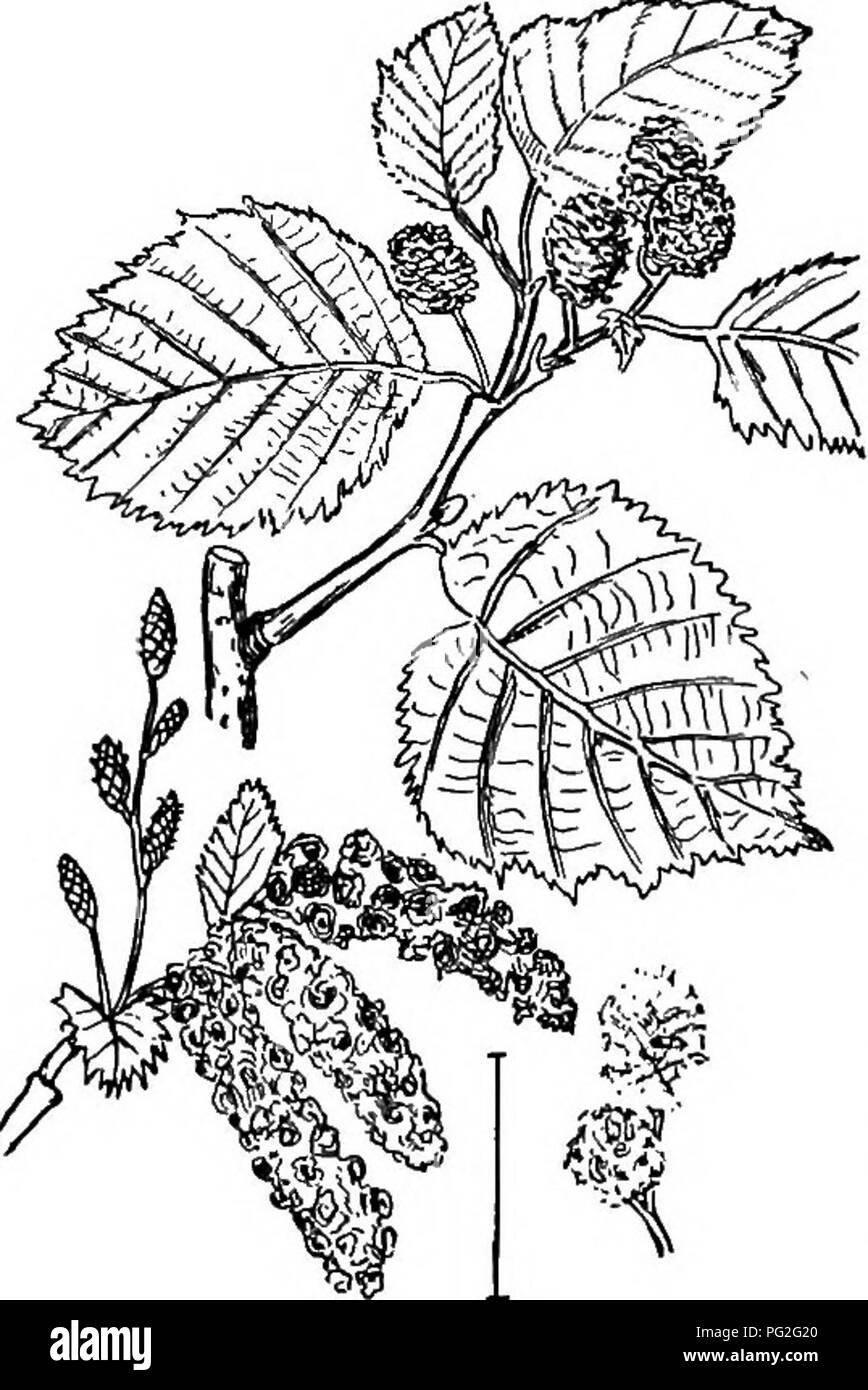
Dieser Eintrag enthält Beschreibungen harter, kultivierter Ziersträucher in den Vereinigten Staaten, mit einem Schwerpunkt auf dem Purple-blättrigen Filbert (Corylus maxima purpurea). Das Buch beleuchtet seltene Sträucher und enthält Informationen über Eichensorten, die aufgrund ihrer großen Größe und charakteristischen Eichelfrucht in der Regel nicht in Strauchform angebaut werden.
1292 x 1935 px | 21,9 x 32,8 cm | 8,6 x 12,9 inches | 150dpi
Weitere Informationen:
Dieses Bild ist ein gemeinfreies Bild. Dies bedeutet, dass entweder das Urheberrecht dafür abgelaufen ist oder der Inhaber des Bildes auf sein Urheberrecht verzichtet hat. Alamy berechnet Ihnen eine Gebühr für den Zugriff auf die hochauflösende Kopie des Bildes.
Dieses Bild kann kleinere Mängel aufweisen, da es sich um ein historisches Bild oder ein Reportagebild handel
. Ornamental shrubs of the United States (hardy, cultivated). Shrubs. 314 DESCRIPTIONS OP THE SHRUBS species of filberts are so rare in cultivation that none need be mentioned in this book except Purple-leaved Filbert â Corylus maxima purpurea, â which is cultivated for its deep purplish red leaves rather than for fruit [Seeds; suckers.] Qufircus. The Oaks are nearly ah tall trees and the few shrubby forms are practically never cultivated and so this book of ornamental shrubs needs no place for them. The acorn fruit is distinctive and sepa- rates oaks from all other plants. Bear or Black Scrub Oak (565) â Quercus ilicifblia â is a spread- ing shrub 5 to 10 feet high with tangled branches and 3- to 7-lobed leaves, the lobes ending in bristles and the lower side covered with whitish hairs. Chinquapin Oak ââ Quercus prinoidesâis rarely over 8 feet high with wavy-edged leaves having 4 to 8 blunt teeth on each side. [Acorns.] Cast&nea. This genus includes the Chestnut "trees and the Chin- quapin shrubs and may be known by the alternate simple straight- veined leaves and the large spiny- coated fruit with more or less rounded nuts. Chinquapin (566) â Castanea piimila â is a handsome shrub or tree 6 to 50 feet high with a single (rarely 2) nut, J inch, in a prickly bur. The leaves are whitish-downy below. Japan Chestnut (567)âCastanea crenS, ta â is a hardy shrub or tree to 30 feet which begins to bear chestnuts when only a few years old and but a few feet high; the leaves are smooth below when mature. [Seeds.]. Fig. 558. âGreen Alder. Silix. The Willows form a large genus, nearly 200 species, of hardy shrubs and trees abundant in all cold countries. A number of trees are in cultivation and many of those which are only shrubby are con- sidered worthy of ornamental use. There is no genus of plants more difficult to separate into species than the willows. All are dioecious, meaning that the pollen-bearing catkins are on one plant, the seed-form- ing catki