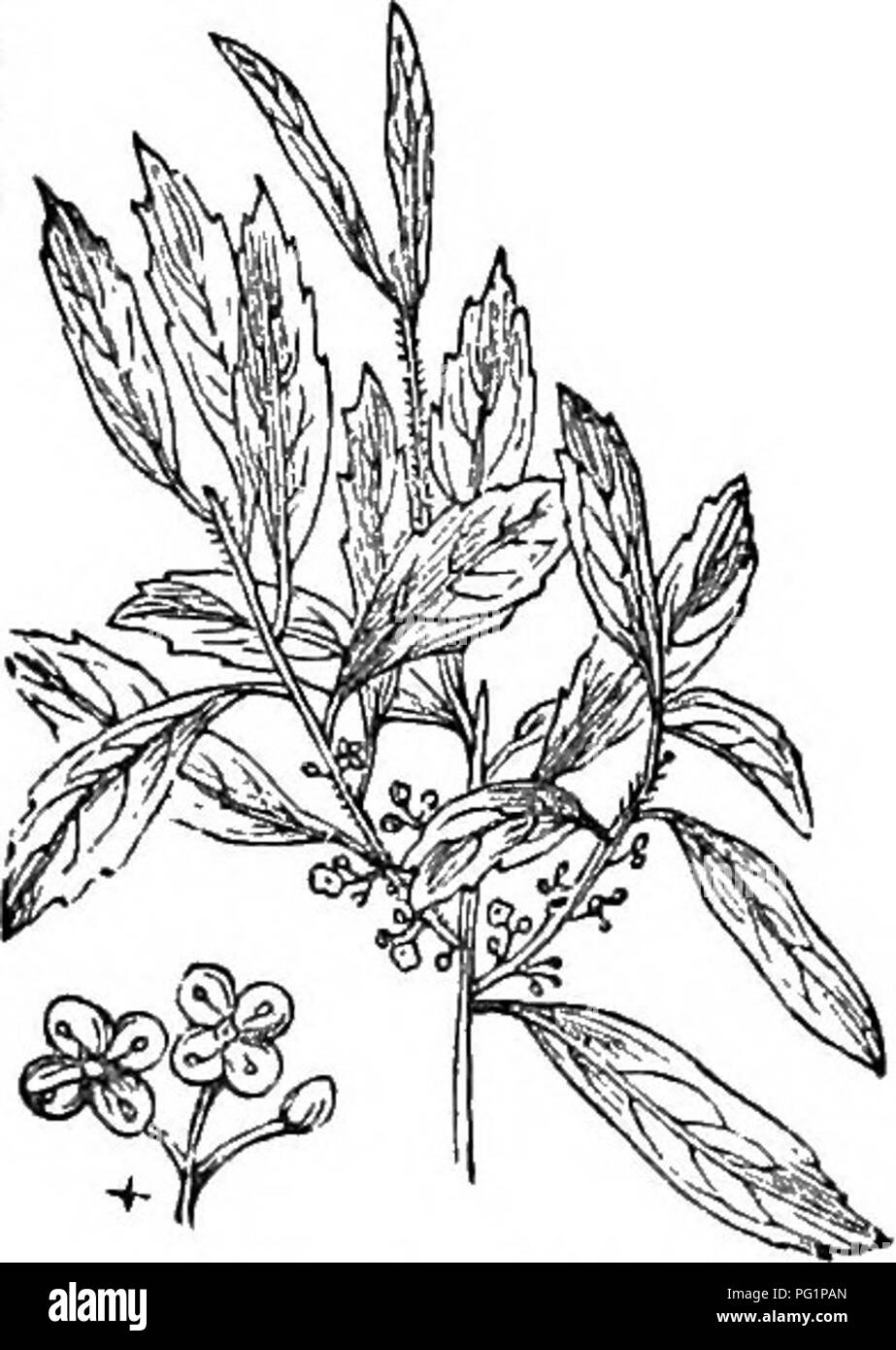
Dieser Text bietet einen umfassenden Leitfaden zu den harten Bäumen und Sträuchern Großbritanniens, in dem sowohl einheimische als auch ausländische Arten beschrieben werden. Sie umfasst die Vermehrung, den Anbau und die Verwendung dieser Pflanzen, unterstützt durch Gravuren fast aller Arten. Diese Arbeit dient sowohl für Botaniker als auch für Gärtner als wichtige Referenz und veranschaulicht die Vielfalt der britischen Flora.
1332 x 1876 px | 22,6 x 31,8 cm | 8,9 x 12,5 inches | 150dpi
Weitere Informationen:
Nur Zugriffsrechte. Dies ist ein Handout- oder gemeinfreies Bild, das von einem Dritten bereitgestellt wurde. Alamy gewährt Zugriff auf die digitale Datei, übernimmt jedoch keine Gewährleistungen hinsichtlich Urheberrecht oder Persönlichkeitsrechten. Änderungen, Bearbeitungen oder Zuschnitte sind ohne vorherige Genehmigung untersagt. Alle kommerziellen Nutzungen erfordern eine vorherige Genehmigung des Inhaltsanbieters.
Dieses Bild kann kleinere Mängel aufweisen, da es sich um ein historisches Bild oder ein Reportagebild handel
. Trees and shrubs : an abridgment of the Arboretum et fruticetum britannicum : containing the hardy trees and schrubs of Britain, native and foreign, scientifically and popularly described : with their propagation, culture and uses and engravings of nearly all the species. Trees; Shrubs; Forests and forestry. 230. riex Dahadn. 231. riPx Dakodiu fruit. It is most commonly kept in green-houses or pits: but there was a plant in 1836 in the open air, in the Mile End Nursery, which was 20 ft. high, with a head 30 ft. in diameter ; and which had stood there many years, with- out the slightest protection. Other Species oflHex are described by authors as natives of North America and Nepal, some of which are introduced, and may probably be found hardy, but we can state nothing with certainty respecting them. In this genus, as in most others containing numerous species which are not in general cultiva- tion, there is a great deal of uncertainty. /. Cassine, I. voniitoria and /. Dahoon are probably the same species. Genus III. PRrNOS L. The Prinos, or WINTER Berry. Lin, Syst. Hexandria Monogynia, or Polygamia DioeVia.. Jicnlification. Lin. Gen., No. 461.; Dec. Prod., 2. p. 16.; Don's Mill., 2. p. 20. Synonymes. Agferia Adans. Fam. 2, p. 166.; Apalanche, Fr. -, Wimerbeere, Ger. Derivation. From prinos, the Greek name for the holly, which the present genus much resembles ; or, according to others, from prion, a saw, on account of the serrated leaves of the species. Gen. Char. Flowers 6-cleft, hexandrous; usually dioecious, or polygamous from abortion. Frvit with 6 nuts. In other re.spects the character is the same as that of Tlex. (Don's Mill.) Leaves simple, axillary, exstipulate, deciduous or evergreen ; oval or lanceolate, entire or serrated; dying off of a greenish yellow. Flowers on axillary pedicels, usually single, small, mostly white. — Shrubs, ever- green and deciduous ; natives of North America. In habit of growth the species are all more or less fastigiate, and sen