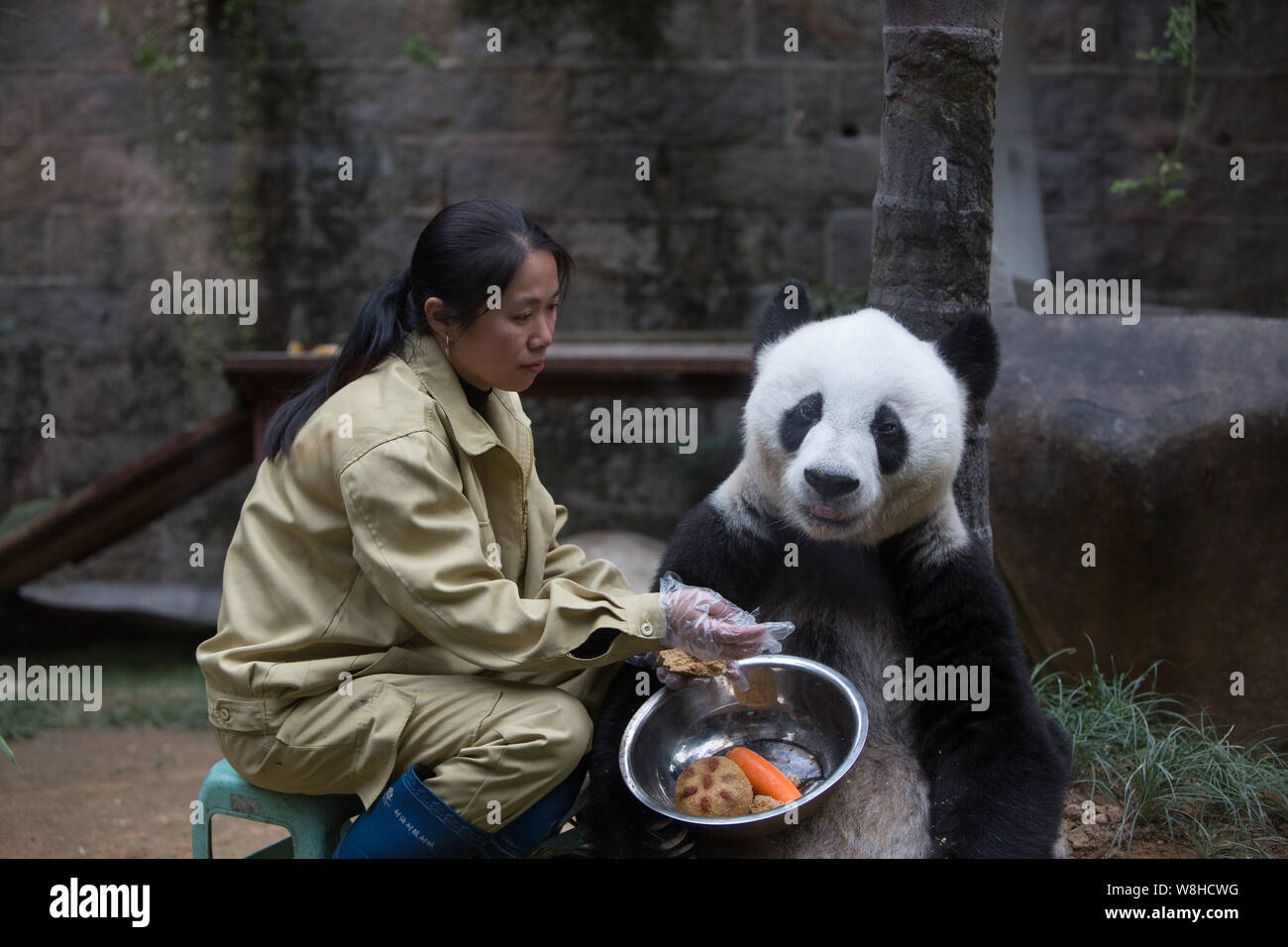
Ein chinesischer Mitarbeiter Feeds 35-jährige weibliche Panda Basi mit Futter auf der Fuzhou Giant Panda Forschungszentrum in Fuzhou city, Südosten Chinas F
A Chinese employee feeds 35-year-old female giant panda Basi with fodder at the Fuzhou Giant Panda Research Center in Fuzhou city, southeast China's Fujian province, 28 November 2015. Panda lovers and researchers from across the world got together at a research center in Fujian province to celebrate the birthday of the female panda Basi, who turned 35. Basi is the world's second oldest living giant panda, two years younger than the 37-year-old Jia Jia who lives at Hong Kong's Ocean Park. Basi was named after the valley of Baoxing county in Sichuan province where she was born in 1980. She was relocated to the Fuzhou Giant Panda Research Center in Fujian province in 1985 after all the bamboo in her native habitat died off. In 1987, Basi was invited to stay for half a year at San Diego Zoo, where she amazed over 2.5 million visitors with her acrobatic performances. In 1990, Basi became a household name in China when she was named as the mascot for the 11th Asian Games held in Beijing. A year later she rose to stardom after performing in front of millions during the Spring Festival Gala.