4292 x 3058 px | 36,3 x 25,9 cm | 14,3 x 10,2 inches | 300dpi
Aufnahmedatum:
24. April 2014
Ort:
United Kingdom
Weitere Informationen:
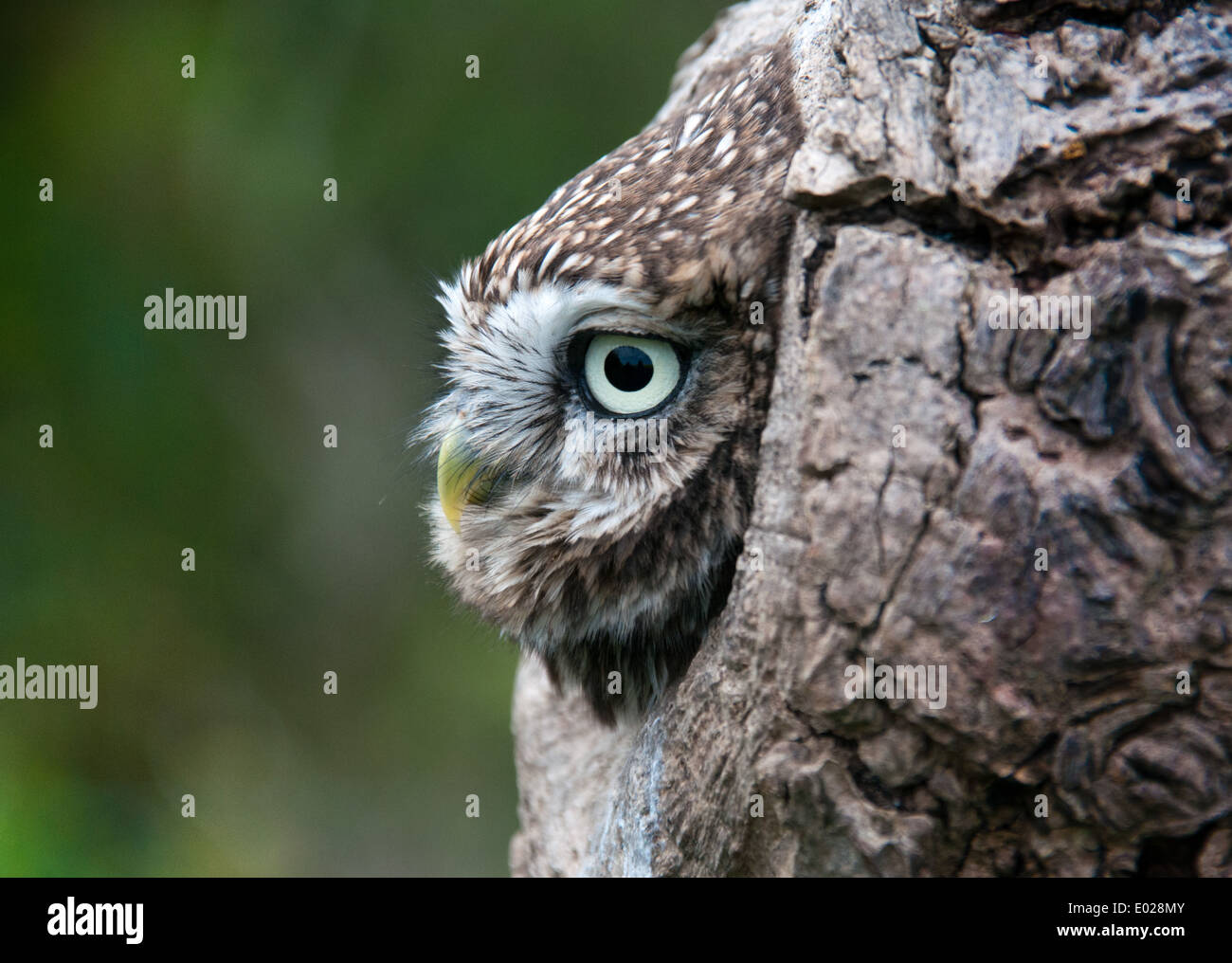
A Little Owl looking out of a hole in a tree. The Little Owl (Athene noctua) is a bird that inhabits much of the temperate and warmer parts of Europe, Asia east to Korea, and north Africa. It is not native to Great Britain and was first introduced in 1842, by Thomas Powys and is now naturalised there. It was also successfully introduced to the South Island of New Zealand in the early 20th century. This is a sedentary species which is found in open country such as mixed farmland and parkland. It takes prey such as insects, earthworms, amphibians, but also small birds and mammals. It can attack birds of considerable size like game birds. It is partly diurnal and often perches boldly and prominently during the day. It becomes more vocal in nights as the breeding season approaches. Nest location varies based on the habitat, nests being found in holes in trees, rocks, cliffs, river banks, walls, buildings etc. It lays 3-5 eggs which are incubated by the female for 28–29 days, with a further 26 days to fledging. Little Owls will also nest in buildings, both abandoned and those fitted with custom owl nest boxes. If living in an area with a large amount of human activity, Little Owls may grow used to man and will remain on their perch, often in full view, while humans are around. Latin name Athene noctua Family Owls (Strigidae)