6968 x 5464 px | 59 x 46,3 cm | 23,2 x 18,2 inches | 300dpi
Aufnahmedatum:
25. August 2025
Ort:
Brixton, London, England, UK
Weitere Informationen:
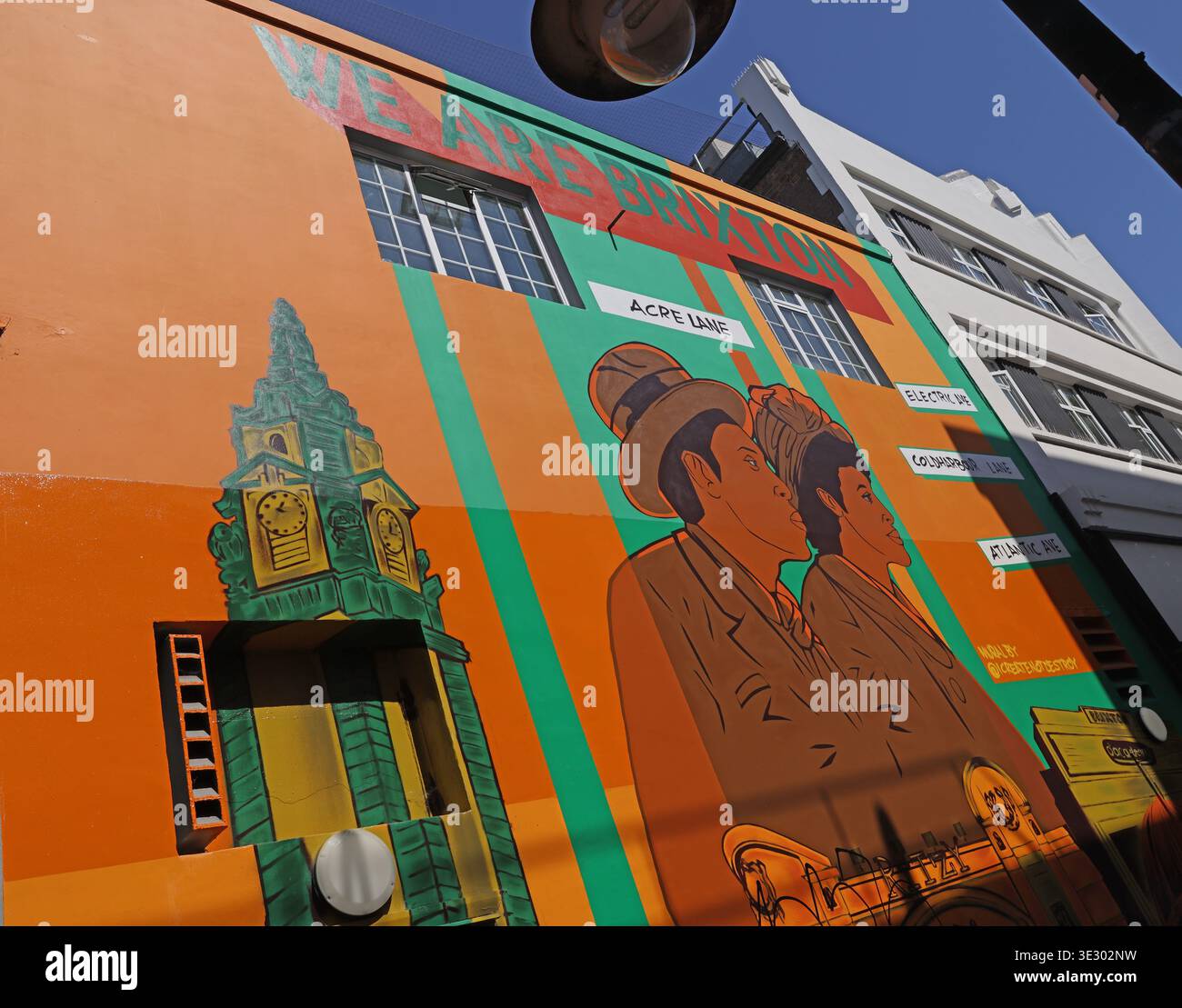
. Large 'We Are Brixton' mural and community artwork on a building in Brixton, south London, using bold colour and graphic portraiture to express local identity. Brixton has one of the capital's most distinctive cultural reputations, shaped by successive waves of migration, a major Caribbean and African diaspora, music, independent retail, markets, nightlife and long-running community activism. Public art has become an especially visible part of that identity, appearing on walls, shutters, railway arches and redevelopment sites across the district. The words 'We Are Brixton' frame the artwork as a collective statement rather than simply a decorative mural, connecting the physical streetscape with debates about belonging, representation and who has a voice in a rapidly changing London neighbourhood. Brixton's twentieth-century history includes both severe social and economic pressures and an extraordinary cultural influence on British music, food, fashion and political life. From the post-war Windrush generation onwards, the area became an important centre of Black British community life, while later decades brought regeneration, rising property values and arguments over gentrification and the survival of local businesses. The photograph therefore records more than a painted façade: it shows how street art can act as a public marker of place, memory and civic pride. Murals in Brixton often sit alongside busy commercial streets and markets, allowing art to be encountered in ordinary daily life rather than within a gallery. The strong colours and large scale make the work visible from street level and give the surrounding architecture a contemporary visual layer. Community-focused artwork can also preserve local stories at a time when shopfronts, ownership, rents and demographics are changing quickly. Its scale ensures the community message competes visually with commercial signage and redevelopment, keeping local identity prominent in the public realm.