3549 x 4732 px | 30 x 40,1 cm | 11,8 x 15,8 inches | 300dpi
Aufnahmedatum:
23. August 2026
Ort:
Weaver Hall Museum & Workhouse, 162 London Road, Northwich, Cheshire, CW9 8AB
Weitere Informationen:
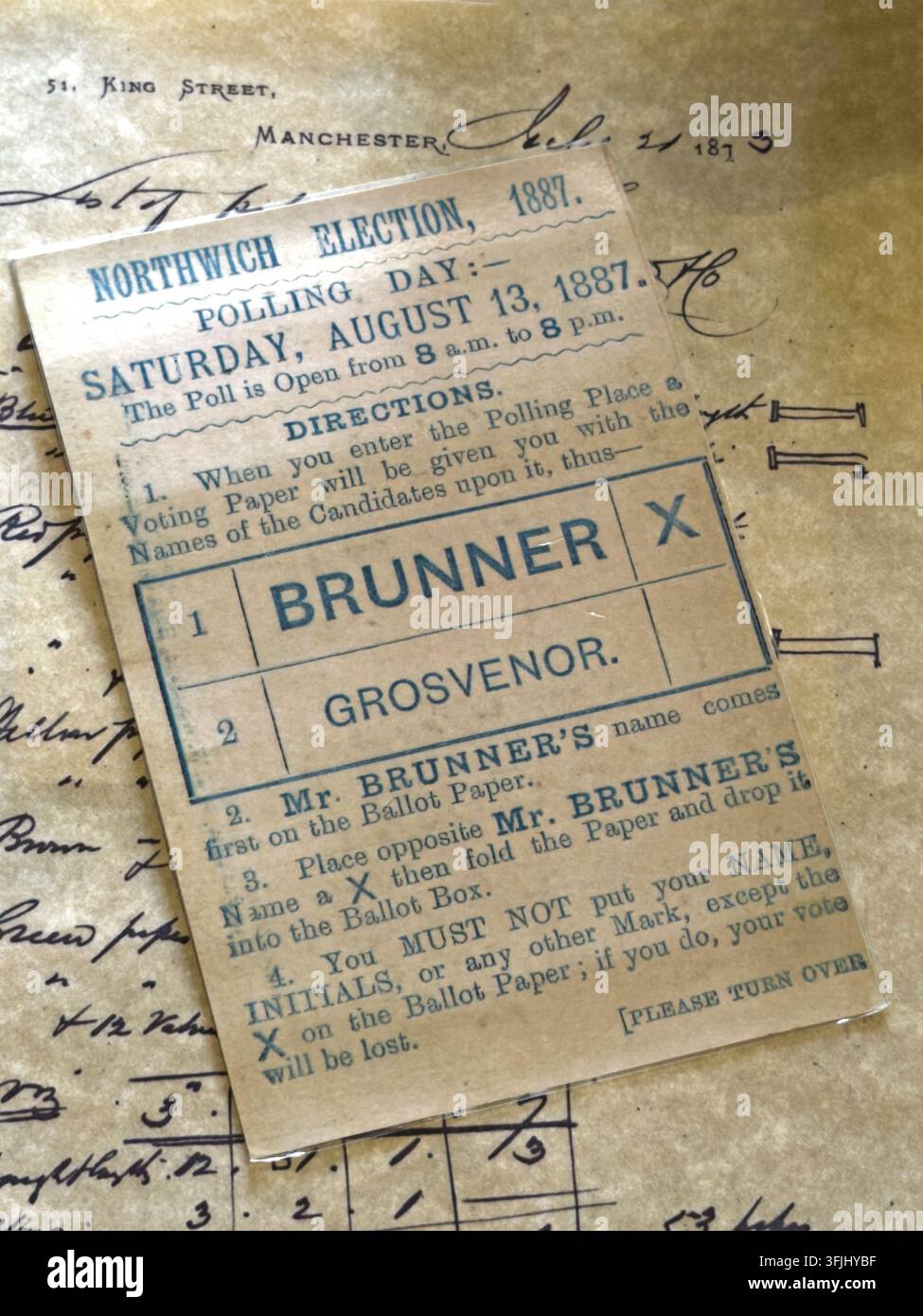
. A surviving piece of election ephemera bearing the words Vote Brunner, photographed in a Northwich museum context. The ageing paper, period type and campaign wording connect the object directly with the political and industrial history of Cheshire, where the Brunner name became closely associated with chemical manufacturing, civic life and parliamentary representation. Sir John Brunner was a co-founder of Brunner, Mond & Company, one of the major businesses in the development of the Northwich and wider Cheshire chemical industry, and he also served as a Liberal MP. Election material linked to the Brunner family helps show how prominent industrialists moved between business, philanthropy and politics during the late nineteenth and early twentieth centuries. Such printed objects were designed to be temporary, making surviving examples valuable evidence of historic campaigning methods. The photograph can illustrate British electoral history, industrial politics, Liberal campaigning, local democracy and museum preservation. Unlike formal portraits or parliamentary records, a simple Vote Brunner notice conveys the practical street-level language of an election. Its presence in a local collection also demonstrates how museums use ephemeral material to connect national political themes with the experiences of a particular town and its industries. The Brunner name is particularly resonant in Northwich because the chemical industry transformed both employment and the physical landscape around the town. Political influence, industrial wealth and philanthropy often overlapped in this period, making election material a useful source for understanding local power. Unlike official parliamentary records, campaign ephemera preserves slogans, typography and persuasion techniques aimed directly at voters. Its survival gives historians a rare glimpse of how political choice was marketed at street level.