3884 x 2914 px | 32,9 x 24,7 cm | 12,9 x 9,7 inches | 300dpi
Aufnahmedatum:
28. August 2013
Ort:
Eskbank Road, Dalkeith,Midlothian,Scotland,UK
Weitere Informationen:
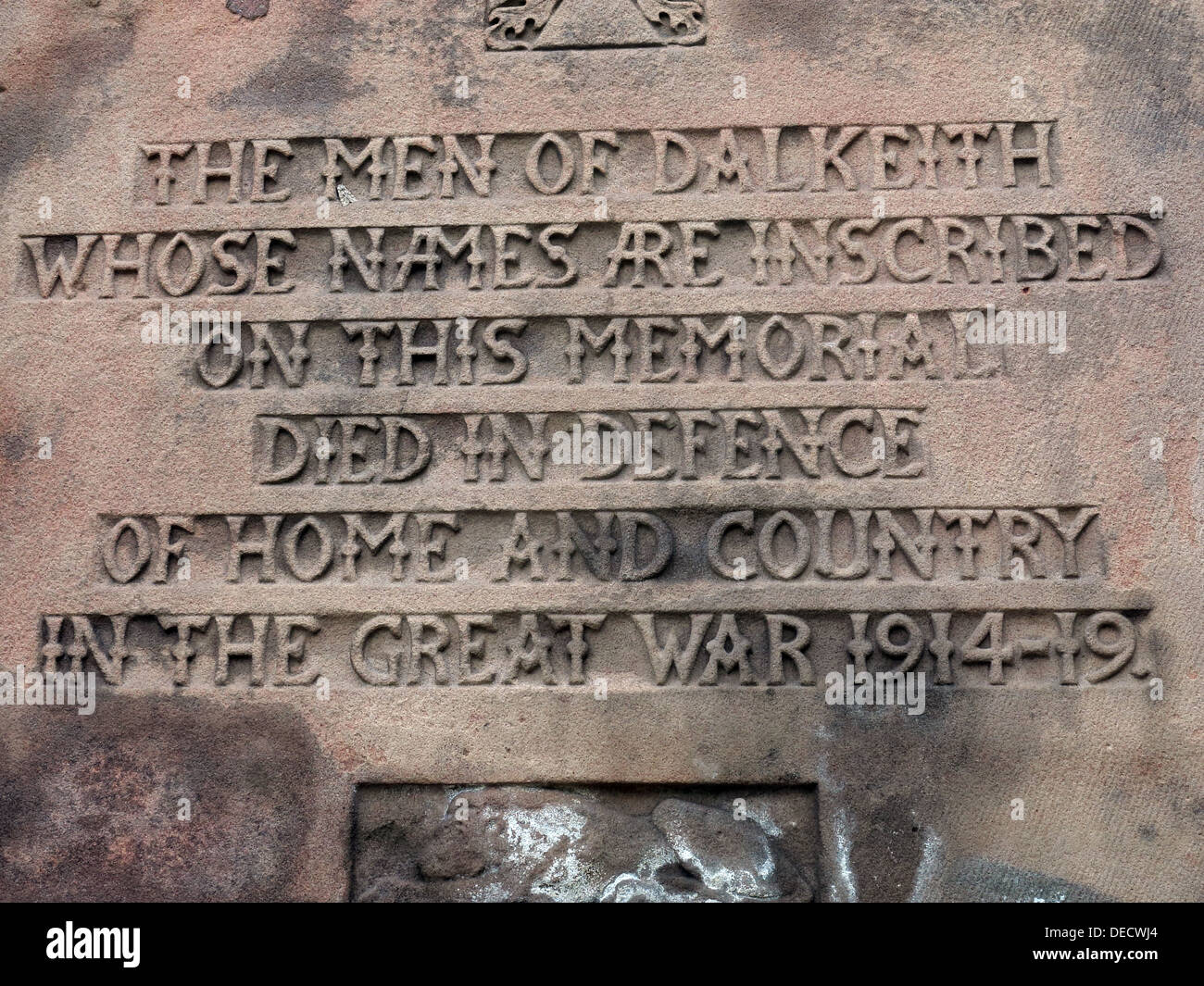
. Inscriptions on Dalkeith War memorial 1914-19, Midlothian, Scotland, UK. Photographed on 28 August 2013. The recorded location is Eskbank Road, Dalkeith, Midlothian, Scotland, UK. The men of Dalkeith whose names are inscribed on this memorial, died in defence of home and country in the great war 1914-19. The wider historical story is that commemorative plaques, gravestones and monuments transform individual or collective memory into a permanent feature of the landscape; Their wording, materials and location can illuminate genealogy, social history, military service and changing attitudes to public remembrance. Historically, war history is preserved through both formal monuments and ordinary material culture; Bags, signs, uniforms, tools and inscriptions can show the routines of service as clearly as grand memorials show public remembrance. In the present 2026 context, memorials continue to play an active role in public history, supporting remembrance, genealogy, education and heritage tourism; Images can also record inscriptions before erosion or redevelopment alters the physical object. In 2026, the two world wars continue to be central to British remembrance, museum interpretation and family-history research; Surviving objects and inscriptions are increasingly valuable as living memory recedes and institutions rely more heavily on archives and material evidence. Looking at the subject's development, historic inscriptions provide unusually direct documentary evidence; Names, dates, dedications and symbolic imagery can connect a present-day location with former residents, workers, congregations or wartime casualties, making the object relevant to both genealogy and wider social history. The subject remains topical in 2026 because memorials still play an active role in public history, supporting remembrance, genealogy, education and heritage tourism; Images can also record inscriptions before erosion or redevelopment alters the physical object.