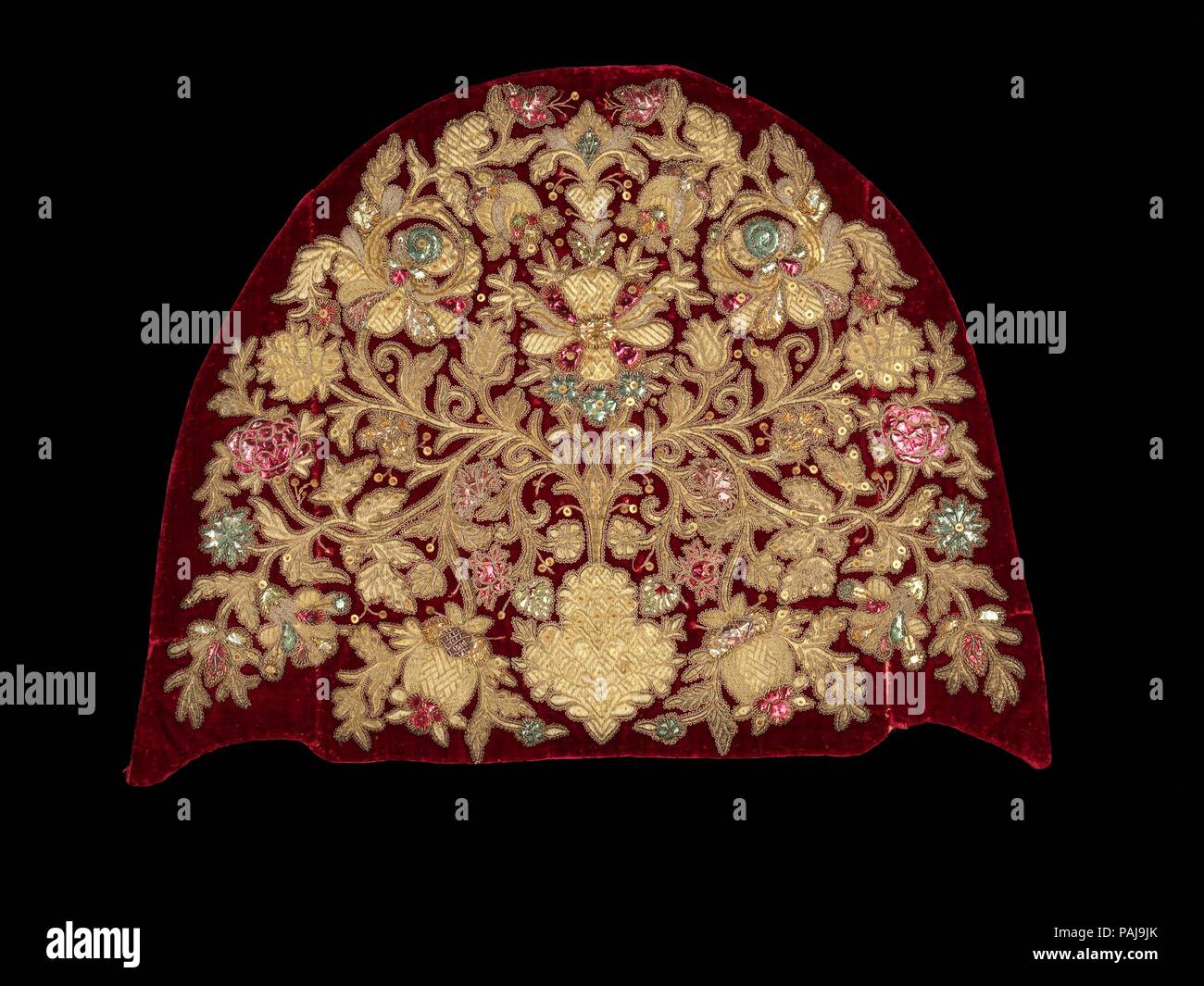
Kopfschmuck. Kultur: Russisch. Datum: 4. Quartal 18. Dieses Objekt wird aus der Sammlung von Natalia de Shabelsky (1841-1905), eine russische Adlige gezwungen, zu bewahren, was Sie als The vanishing Volkskunst und Traditionen ihrer Heimat wahrgenommen. Ausgedehnten Reisen in ganz Russland, sammelte sie viele gute Beispiele für textile Kunst der wohlhabenden Bauernstandes. Von 1870 bis 1902 nach Frankreich ziehen, Shabelsky eine große Sammlung von Aufwändig bestickte Hand angesammelt - gewebt, Heimtextilien und opulente Festival Kleider mit reicher Dekoration und aufwendigen Motiven. Th
Dieses Bild kann kleinere Mängel aufweisen, da es sich um ein historisches Bild oder ein Reportagebild handel
Headdress. Culture: Russian. Date: fourth quarter 18th century. This object is from the collection of Natalia de Shabelsky (1841-1905), a Russian noblewoman compelled to preserve what she perceived as the vanishing folk art traditions of her native country. Traveling extensively throughout Great Russia, she collected many fine examples of textile art of the wealthy peasant class. From the 1870s until moving to France in 1902, Shabelsky amassed a large collection of intricately embroidered hand-woven household textiles and opulent festival garments with rich decoration and elaborate motifs. The Brooklyn Museum holdings include many fine examples including the majority of the garments. Portions of Shabelsky's collection are also housed at the Museum of Fine Arts, Boston, the Cleveland Art Museum, and the Russian Museum of Ethnography in St. Petersburg. The colored foil in this partial headdress is particularly striking in contrast with the red velvet and gold embroidery. Headdresses, or kokoshniks had the greatest abundance of ornamentation of any type of garment in Russia. They were most often made of damask woven with gilt metallic threads or velvet with gold embroidery. The wealthy peasant class often decorated their kokoshniks with pearls and gemstones. Their decorative elements were representative of the regions in which they were made. Those from the North were embellished with the river pearls that were plentiful in that area while goose down and woolen embroideries were more popular in the South. The headdresses worn by maidens exposed their hair, considered a prize possession in Russian culture. They were often accompanied by a venchik, a forehead covering made of fabric or metal. Museum: Metropolitan Museum of Art, New York, USA.