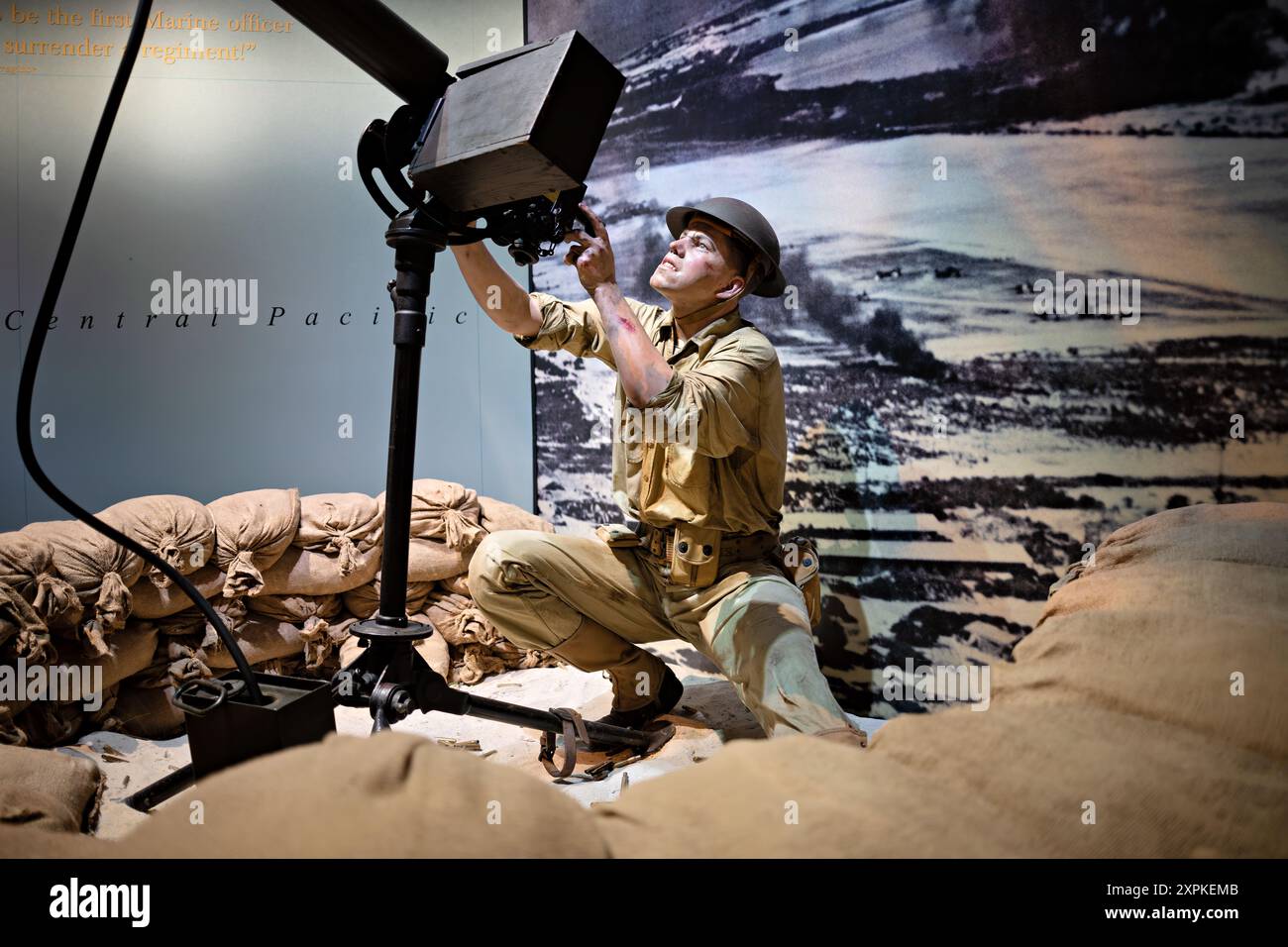
National Museum of the Marine Corps Wake Island Exhibit Triangle Virginia // TRIANGLE, Virginia, Vereinigte Staaten — die Wake Island-Ausstellung mit einem Browning-Maschinengewehr 1917A1 im National Museum of the Marine Corps in Triangle, Virginia. Diese Ausstellung erinnert an die heldenhafte Verteidigung von Wake Island durch US-Marines, Seeleute und zivile Auftragnehmer gegen japanische Streitkräfte im Dezember 1941, während der ersten Tage der amerikanischen Beteiligung am Zweiten Weltkrieg. Die Ausstellung zeigt die entscheidende Rolle von Waffen wie der Browning Maschinengewehr bei der Verteidigung der Insel.
8256 x 5504 px | 69,9 x 46,6 cm | 27,5 x 18,3 inches | 300dpi
Aufnahmedatum:
30. Juli 2024
Ort:
National Museum of the Marine Corps, Triangle, Virginia, United States
Weitere Informationen:
Photograph by David Coleman. The Wake Island exhibit at the National Museum of the Marine Corps offers visitors a powerful glimpse into one of the earliest and most dramatic battles faced by U.S. forces in the Pacific Theater of World War II. This display centers on the 1917A1 Browning machine gun, a weapon that played a crucial role in the defense of Wake Island against Japanese invasion in December 1941. The Battle of Wake Island began on December 8, 1941, just hours after the attack on Pearl Harbor, when Japanese aircraft bombed the island. For 15 days, a small force of U.S. Marines, sailors, and civilian contractors held off a much larger Japanese force, earning the island the nickname "The Alamo of the Pacific." The exhibit likely includes detailed information about the 1917A1 Browning machine gun, a water-cooled .30 caliber weapon known for its reliability and sustained fire capability. This type of machine gun was a standard weapon for U.S. forces in the early years of World War II and would have been crucial in defending against Japanese air and naval attacks on Wake Island. Surrounding the Browning machine gun, the exhibit probably features photographs, maps, and personal accounts from the defenders of Wake Island. It may also include artifacts recovered from the battle, such as spent shell casings, personal effects of the defenders, or items related to the civilian contractors from Pan American Airways who assisted in the island's defense. The Wake Island exhibit serves multiple purposes: it honors the bravery of the island's defenders, educates visitors about this significant early battle of World War II, and demonstrates the importance of weapons like the Browning machine gun in modern warfare. It also highlights the strategic importance of Pacific islands in the global conflict and the challenges faced by isolated garrisons. This display is part of the museum's broader narrative of the Marine Corps' role in World War II, illustrating the Corps' readines