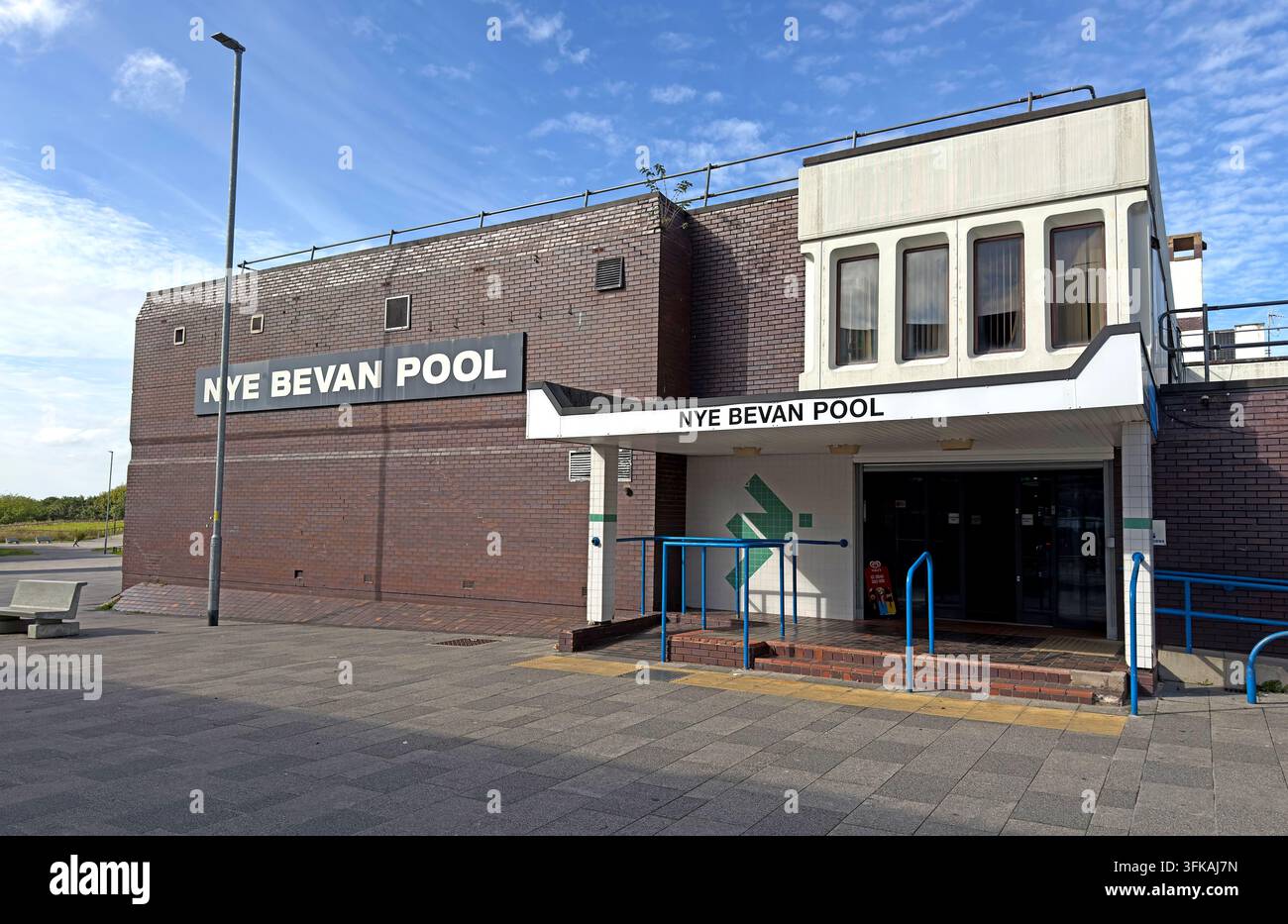
Nye-Bevan-Pool im Stadtzentrum von Skelmersdale, eine lang etablierte öffentliche Freizeiteinrichtung, fotografiert mitten in der Debatte über ihre Zukunft und die Kosten der Gemeinde.
6764 x 4389 px | 57,3 x 37,2 cm | 22,5 x 14,6 inches | 300dpi
Aufnahmedatum:
13. September 2026
Ort:
Nye Bevan Pool, The Concourse, Southway, Skelmersdale, Lancashire, WN8 6LT
Weitere Informationen:
. Nye Bevan Pool on Southway beside The Concourse in Skelmersdale is a long-established public leisure centre whose plain civic frontage reflects the practical community facilities built into many post-war New Towns. The centre has included a 25-metre main pool, a smaller learner pool, fitness facilities and health-suite provision, making it a place for swimming lessons, exercise, clubs and affordable local recreation rather than a destination resort. Its name commemorates Aneurin “Nye” Bevan, the Labour politician most closely associated with the creation of the National Health Service, giving the building an added connection with twentieth-century ideas about collective public provision. In February 2025 West Lancashire Borough Council officers recommended closure of Nye Bevan and Park Pool, arguing that keeping the centres operating was no longer financially viable within the authority’s budget pressures. That debate made the building emblematic of a wider national problem: ageing leisure facilities can require substantial energy, staffing and capital expenditure at the same time councils face difficult choices over statutory and discretionary services. Swimming pools are particularly expensive buildings to heat, ventilate and maintain, yet communities value them for water safety, school lessons, rehabilitation, sport and social wellbeing. Photographed as an ordinary town-centre facility, Nye Bevan Pool can therefore illustrate local-government finance, public-sector austerity, leisure-centre closures, community campaigns and the legacy of New Town planning. Its location beside Skelmersdale’s main shopping centre also shows how planners once grouped civic, retail and transport functions around a central hub, an arrangement now being reassessed as towns consider regeneration, health inequality, active lifestyles and the future of ageing public buildings. The centre’s learner pool is particularly relevant to the public-value argument because local.