4890 x 5580 px | 41,4 x 47,2 cm | 16,3 x 18,6 inches | 300dpi
Aufnahmedatum:
22. August 2026
Ort:
The Haçienda, Whitworth Street West, Manchester, England, UK
Weitere Informationen:
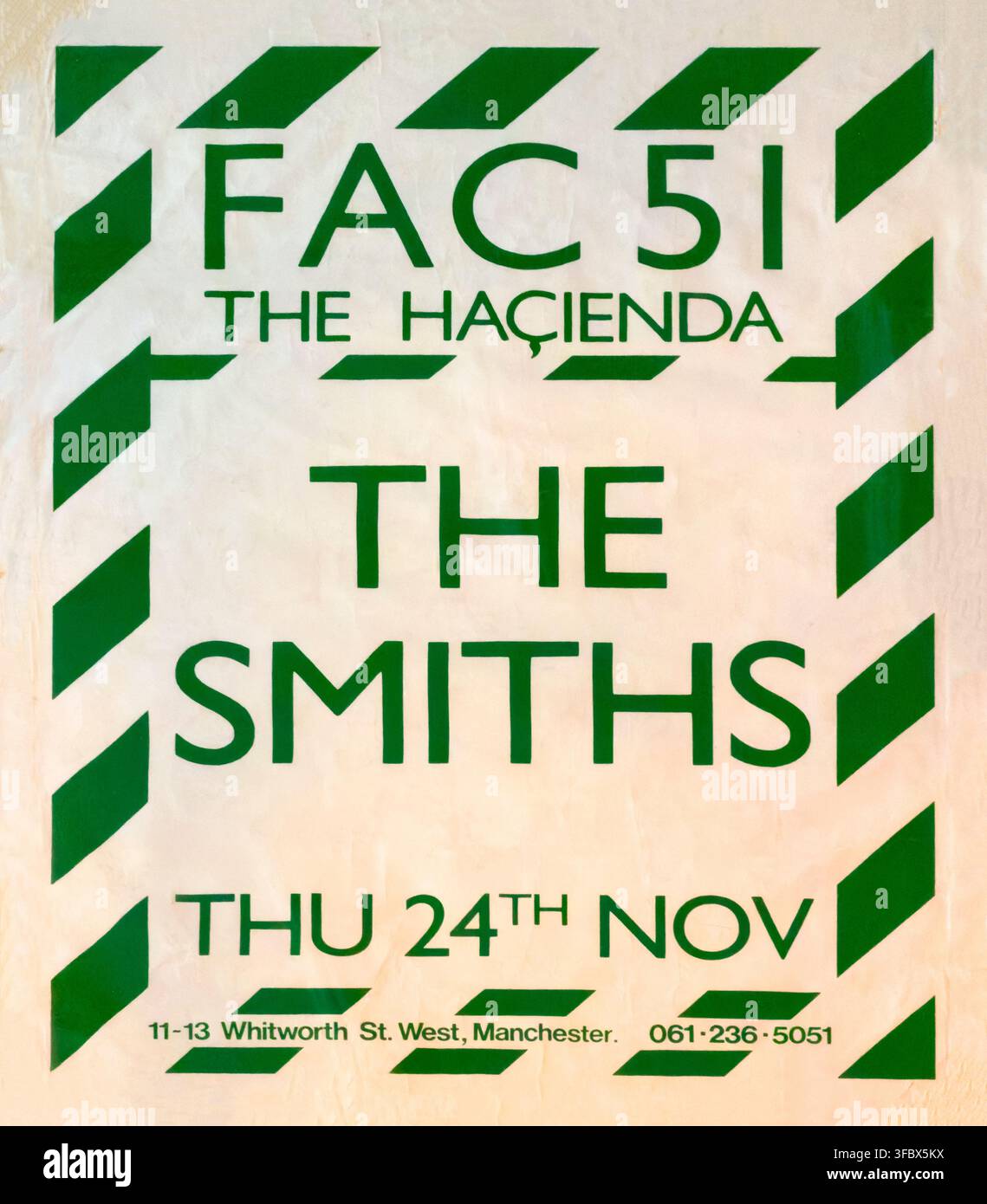
. An original flyer advertises The Smiths appearing at Manchester’s Haçienda on Thursday 24 November 1983, with fellow Manchester band James as support. The date captures both groups at an early stage of careers that would become closely associated with the city’s independent music history. The Smiths had formed in Manchester in 1982 around Morrissey and guitarist Johnny Marr and were rapidly building a national following through distinctive guitar-led songs and provocative, literate lyrics. James, also emerging from the city’s post-punk environment, would later achieve major commercial success in their own right. The venue itself was FAC 51 The Haçienda, the Factory Records nightclub on Whitworth Street West that became central to Manchester’s musical reputation during the 1980s and early 1990s. Before the later acid-house and Madchester era, the club hosted a wide range of live bands, making flyers from this period valuable evidence of its changing programme. The stark graphic design is characteristic of inexpensive gig ephemera intended for short-term street and club promotion but now collected as cultural history. The November 1983 billing captures The Smiths and James at an early point in careers that would become central to Manchester music, while the Haçienda links the concert directly to Factory Records and the city’s post-punk club culture. The pairing of The Smiths and James is especially notable because both would become internationally recognised Manchester acts, yet here they appear in the compact typography of a single club night before their later scale of success. Paper flyers like this also reveal the physical promotional networks of the period, circulating through record shops, venues, student areas and street handouts rather than online channels. Its survival transforms disposable advertising into evidence of exactly who shared a bill, where they played and how emerging bands were positioned to local audiences at a particular moment.