5472 x 3648 px | 46,3 x 30,9 cm | 18,2 x 12,2 inches | 300dpi
Aufnahmedatum:
10. Juli 2022
Ort:
Lord Street, Southport, Merseyside, Preston, England, UK, PR9
Weitere Informationen:
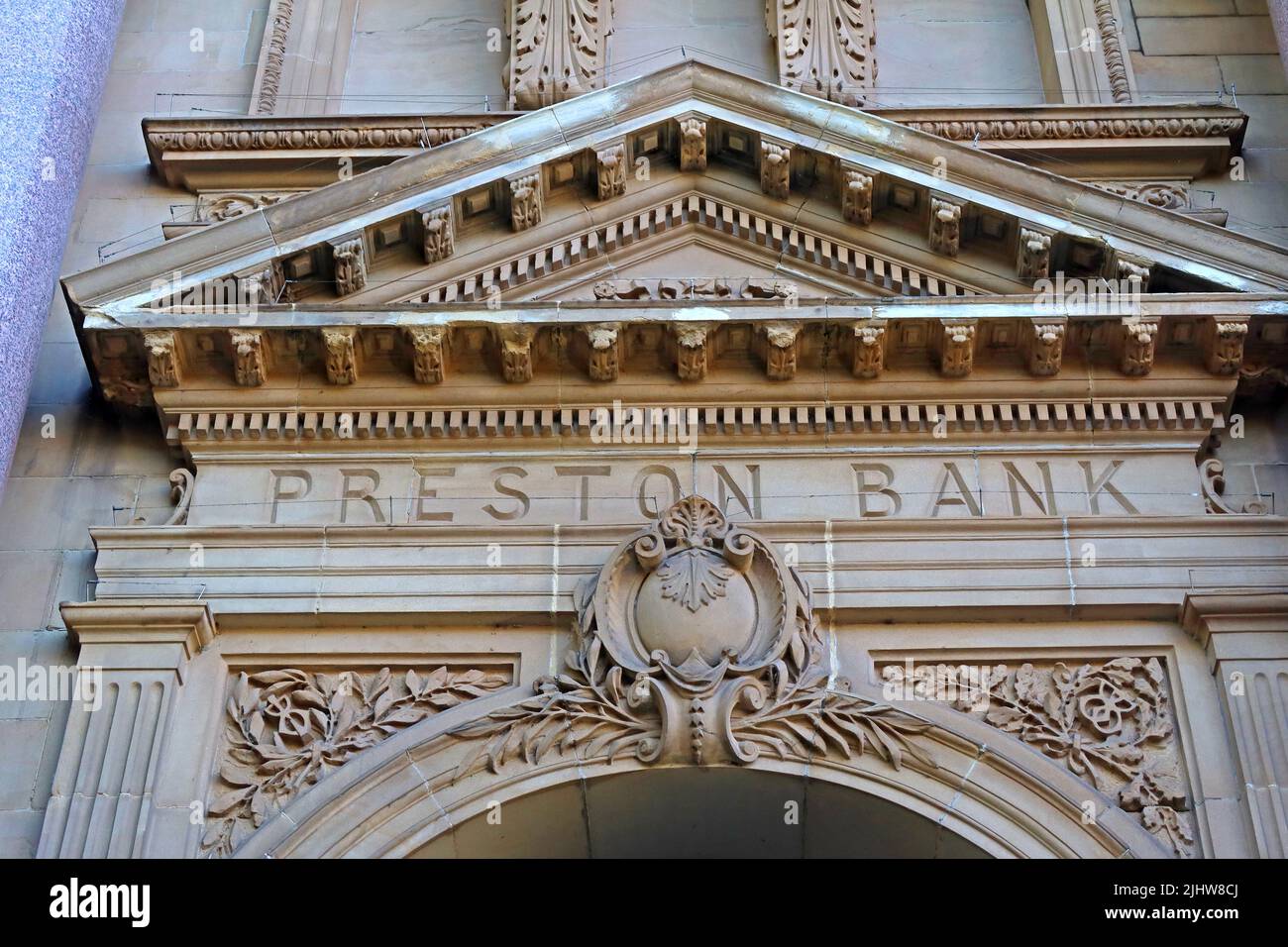
. Preston Bank, Victorian historic bank building, Lord Street, Southport, Merseyside, Lancs, England, UK, PR9. Photographed on 10 July 2022. The recorded location is Lord Street, Southport, Merseyside, Preston, England, UK, PR9. Established in 1844. Acquired Limited Liability in 1883. Amalgamated with London & Midland Bank Limited in 1894. Category: English & Welsh Joint Stock Banks;Family: Midland Bank. The wider historical story is that cash, banknotes and banking equipment document the everyday financial system before contactless cards and mobile payments became dominant; Bank buildings, notes, coins, cheques and cash machines also trace the history of regional banking, savings institutions and the changing design of money. The historical context is that buildings are often the most durable evidence of former institutions and businesses; Stonework, brickwork, windows, signs and decorative details can survive changes of ownership and use, allowing photographs to document both architectural style and the evolution of a street. In historical terms, older buildings and artefacts provide tangible evidence that written records cannot fully replace; Their wear, construction, signage and setting help researchers understand local history, design, industry and social life across different periods. In the present 2026 context, access to cash remains a live issue despite the growth of cards and mobile payments; FCA rules now require major banks and building societies to protect reasonable local access to cash, so photographs of cashpoints, banknotes and closed branches can help illustrate the tension between digital banking and physical financial services. The subject remains topical in 2026 because the reuse of existing buildings is increasingly discussed alongside conservation, embodied carbon and town-centre regeneration; Images of older façades and converted premises can therefore illustrate both architectural heritage and the practical pressures of adapting.