11225 x 8419 px | 95 x 71,3 cm | 37,4 x 28,1 inches | 300dpi
Aufnahmedatum:
24. Juli 2026
Weitere Informationen:
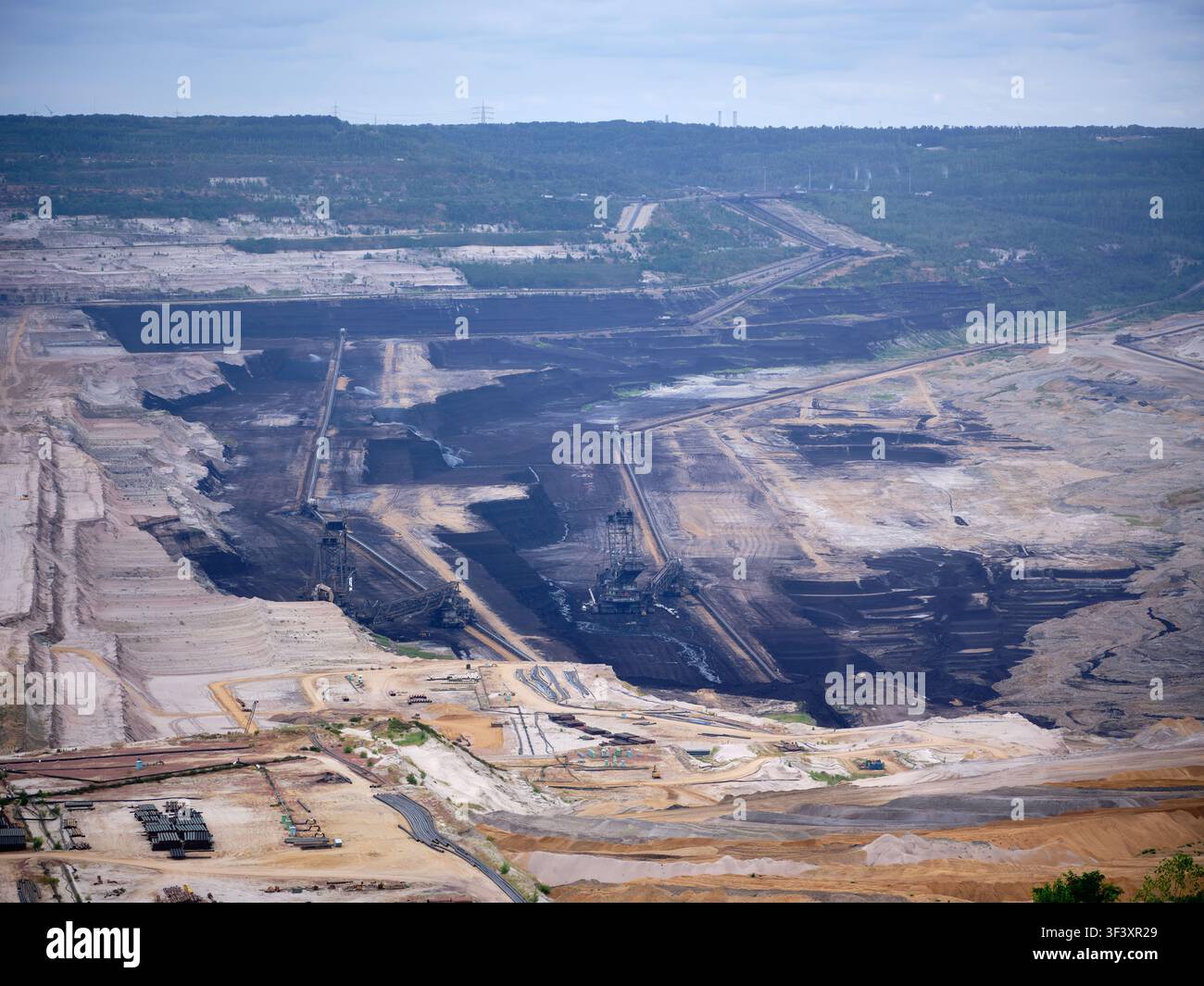
The Hambach open-pit mine (Tagebau Hambach) in North Rhine-Westphalia, Germany, stands as one of the world's most massive and controversial industrial landscapes. Operated by RWE Power, this vast opencast lignite mine is famous for its colossal scale, plunging hundreds of meters below the surface to create the deepest artificial depression in Europe. The site is defined by its engineering marvels, most notably Bagger 293, one of the largest terrestrial vehicles ever built. These giant bucket-wheel excavators move millions of tons of overburden and brown coal daily to fuel the region’s nearby thermal power stations, keeping the German energy grid running but leaving an indelible mark on the geography. In recent years, Hambach has evolved from a symbol of industrial engineering into a global flashpoint for climate change and environmental activism. The expansion of the mine led to severe deforestation, threatening the ancient Hambach Forest and sparking years of high-profile protests, treehouse occupations, and legal battles led by climate activists pushing for an immediate coal phase-out. As Germany transitions toward renewable energy, the future of the Hambach mine is changing. Current long-term plans focus on massive mine reclamation, with the goal of eventually halting excavation and flooding the colossal pit to transform the industrial crater into a massive artificial lake.