2392 x 3601 px | 20,3 x 30,5 cm | 8 x 12 inches | 300dpi
Aufnahmedatum:
3. September 2012
Ort:
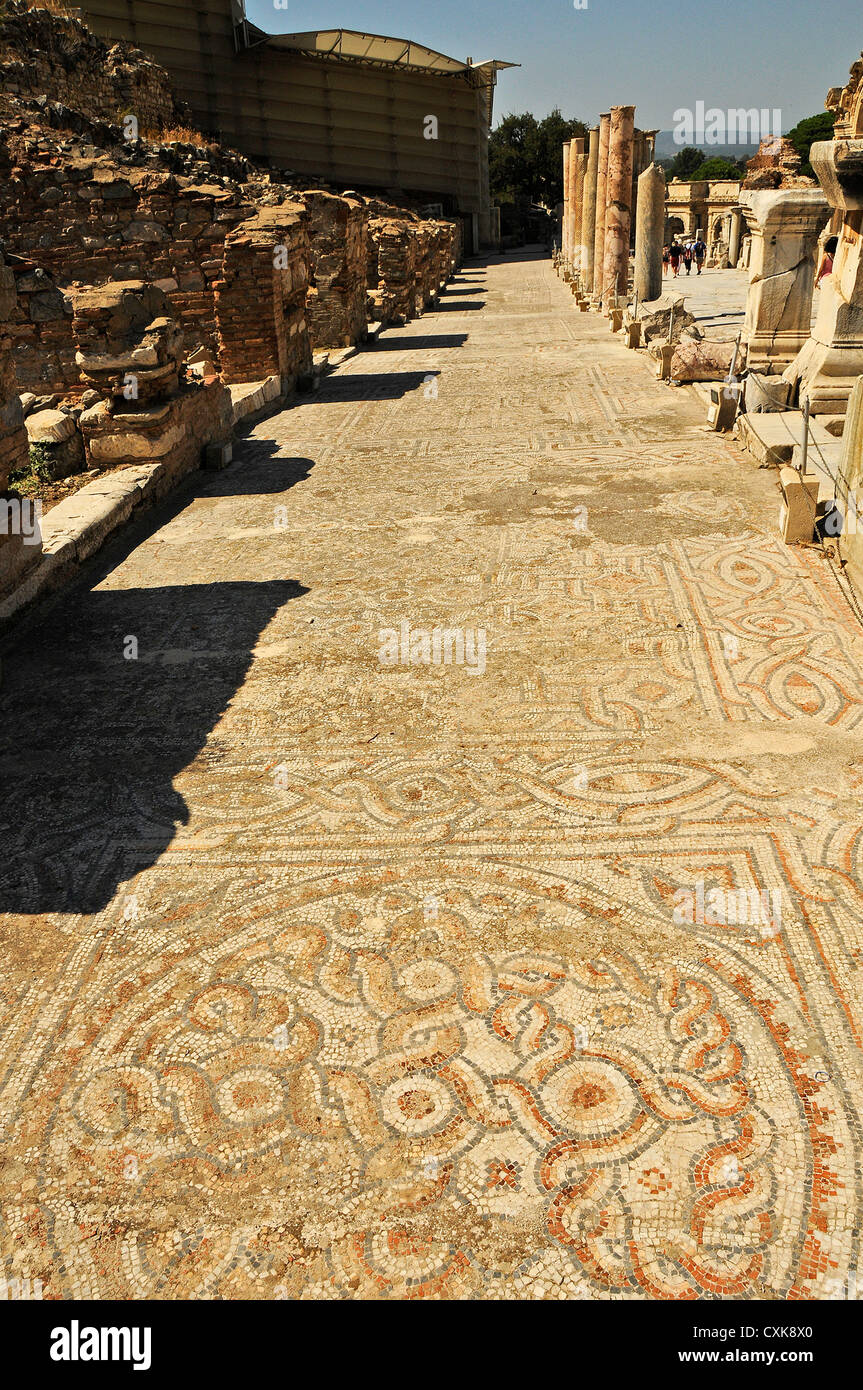
Curetes Street, UNESCO World Heritage Archaeological Site, Ephesus, Turkey
Weitere Informationen:
Mosaics at the side of Curetes Street , UNESCO World Heritage Archaeological Site, Ephesus, Turkey The following information is credited to Wikipedia: Small pieces, normally roughly quadratic, of stone or glass of different colors, known as tesserae, (diminutive tessellae), are used to create a pattern or picture. By 200 BCE cut stone tesserae were being used in Ancient Roman decorative mosaic panels and floor mosaics. Marble or limestone were cut into small cubes and arranged into representational designs and geometric patterns. Most recorded names of Roman mosaic workers are Greek, suggesting they dominated high quality work across the empire; no doubt most ordinary craftsmen were slaves. Splendid mosaic floors are found in Roman villas across North Africa. Often small panels called emblemata were inserted into walls or as the highlights of larger floor-mosaics in coarser work. The normal technique was opus tessellatum, using larger tesserae, which was laid on site. The following information is credited to www.ephesus.us: one of the three main streets of Ephesus between The Hercules Gate till to the Celsus Library.This street took its name from the priests who were called as Curetes later.Their names were written in Prytaneion.