5690 x 3793 px | 48,2 x 32,1 cm | 19 x 12,6 inches | 300dpi
Aufnahmedatum:
März 2015
Ort:
Ferrara, Italy
Weitere Informationen:
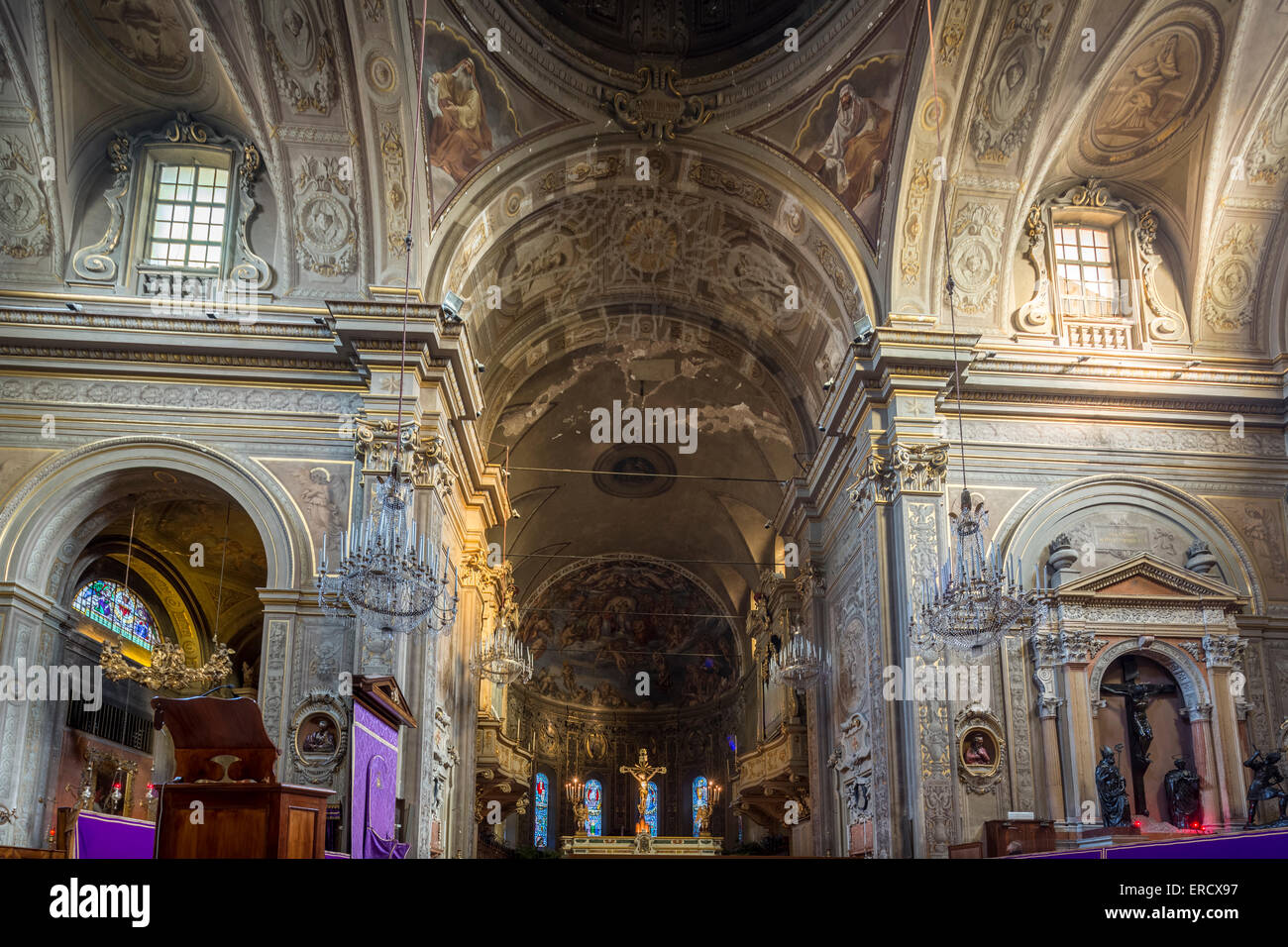
Ferrara Cathedral (Italian: Basilica Cattedrale di San Giorgio, Duomo di Ferrara) is a Roman Catholic cathedral and minor basilica in Ferrara, Northern Italy. Dedicated to Saint George, the patron saint of the city, it is the seat of the Archbishop of Ferrara and the largest religious building in the city. The cathedral stands in the city centre, not far from the Palazzo Comunale and the famous Castello Estense and is connected to the Archbishop's Palace by a covered passage. Construction of the present building began in the 12th century, when the city was being extended towards the left bank of the Po River; the new cathedral was consecrated in 1135. The original Romanesque design is manifest in the façade, which resembles those of Modena and Parma Cathedrals: it is in white marble, with three cusps and a series of loggias, small arcades and rose windows, statues and numerous bas-reliefs. On the right side is a statue of Alberto d'Este, while on the side is a bronze bust of Pope Clement VIII, over an inscription in memory of his capture of the city. In the centre of the façade is a porch, supported by two columns with Atlases seated on lions at the bases. It is decorated with a Last Judgement by an unknown master and a loggia with a Madonna and Child (a late Gothic addition). The portal is the work of the sculptor Nicholaus, a pupil of Wiligelmus. The lunette shows Saint George, patron saint of Ferrara, slaying the dragon; scenes from the Life of Christ appear on the lintel. The jambs framing the entrance are embellished with figures depicting the Annunciation and the four prophets who foretold the coming of Christ. According to a now-destroyed inscription, Nicholaus was responsible for the design of the original building. The two side portals on the west front are also his work, as is the lower loggia here and on the south side of the building. The interior, entirely remade in Baroque style after a fire in the 18th century, has a nave and two aisles.