5472 x 3120 px | 46,3 x 26,4 cm | 18,2 x 10,4 inches | 300dpi
Aufnahmedatum:
19. August 2022
Ort:
Warrington Cemetery, Manchester Rd, Warrington, Cheshire, England, UK, WA1 3BG
Weitere Informationen:
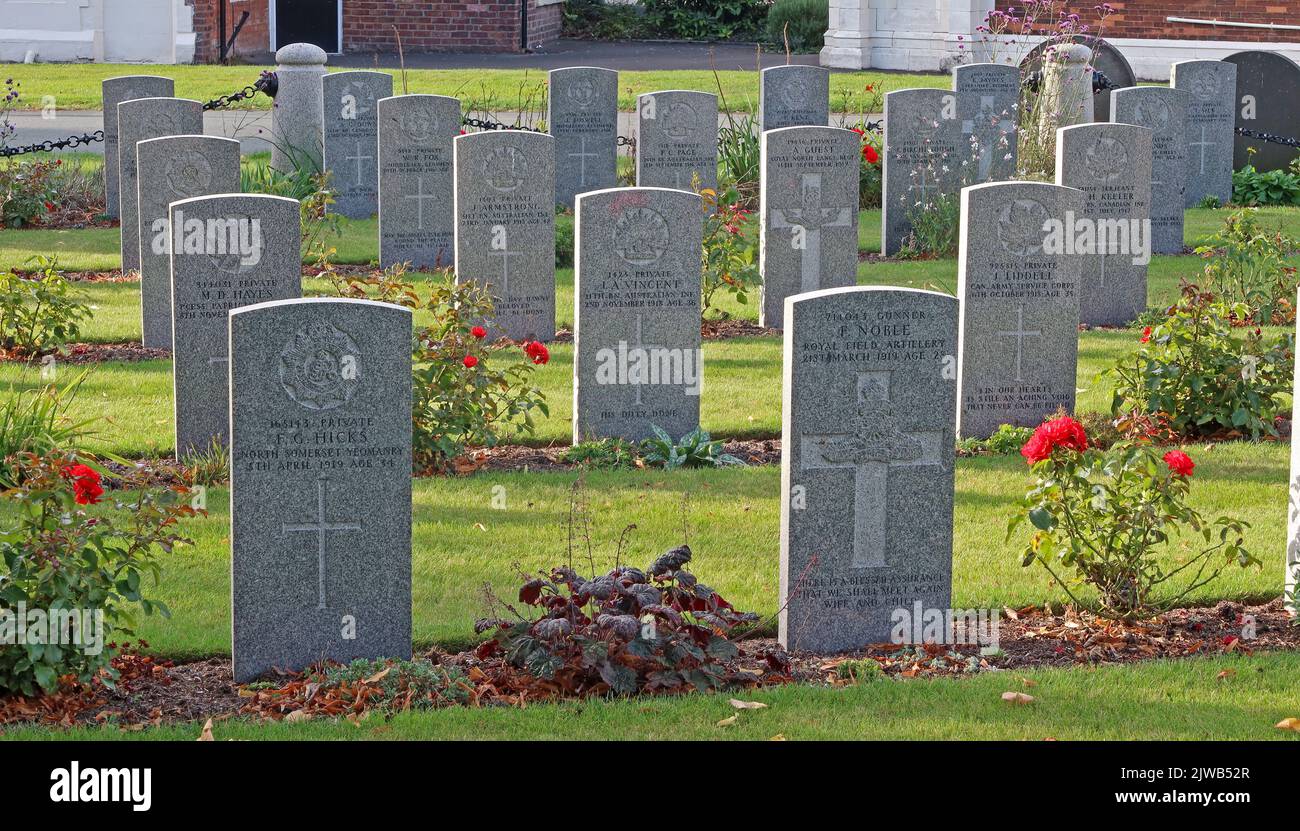
. A grounded documentary photograph made at Warrington Cemetery, Manchester Rd, Warrington, Cheshire, England, UK, WA1 3BG in 2022, combining the immediate subject with evidence of the surrounding streetscape, public realm, business activity or local character. At the centre of the view is War Dead at Warrington Cemetery, Manchester Rd, Warrington, Cheshire, England, UK, WA1 3BG. The surrounding context encompasses commemorative object, public memorial, place identity, passenger transport, community identity, memorial inscription, before-and-after reference, bus infrastructure, roadside transit, street-side transport, changing land use, tribute design, community memory, and regional identity. Today's relevance is strengthened by place identity, bereavement and the continuing question of the value of inscriptions and motifs for local history. From a 2025-onward perspective, decarbonisation and local connectivity are closely linked to this subject, alongside the shift toward cleaner vehicles and integrated ticketing. For later comparison, the photograph preserves commercial use and occupation at Warrington Cemetery, Manchester Rd, Warrington, Cheshire, England, UK, WA1 3BG, details that may look very different after replacement signage. Other useful contextual ideas include public commemoration, local mobility, archival record, place-based remembrance, surface public transport, social history, contemporary social history, and everyday life. References to Manchester and Cemetery give the picture a strong period identity and tie it closely to its named subject. Around Warrington Cemetery, Manchester Rd, Warrington, Cheshire, England, UK, WA1 3BG, apparently routine details can become historically useful once businesses close, buildings change use or familiar features disappear. The period view preserves a point of historical comparison as a date-specific reference. The view records part of the area's social history for later comparison.